
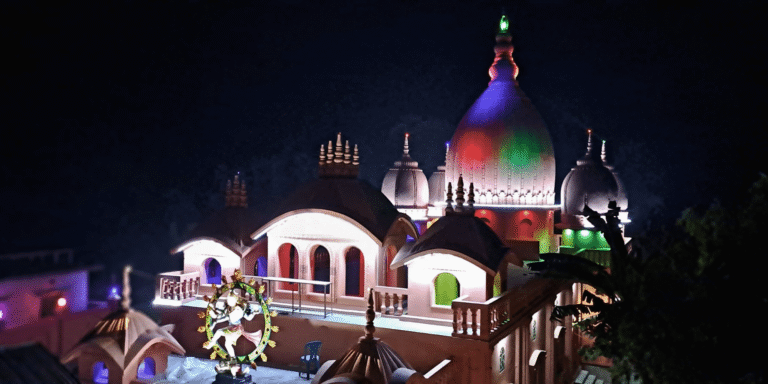
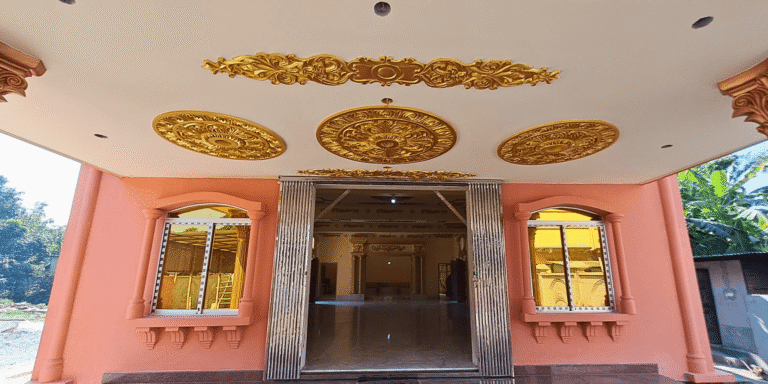
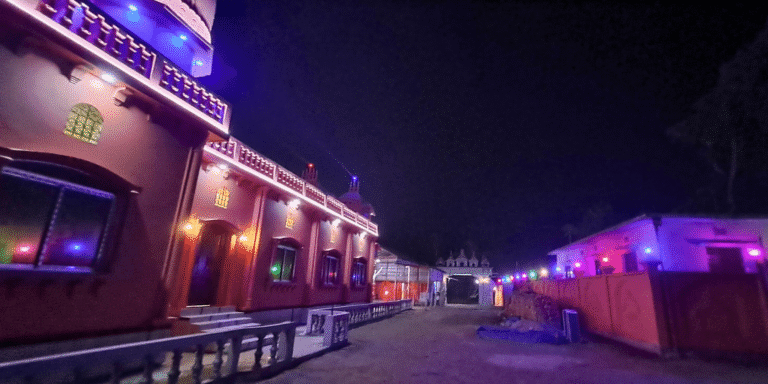

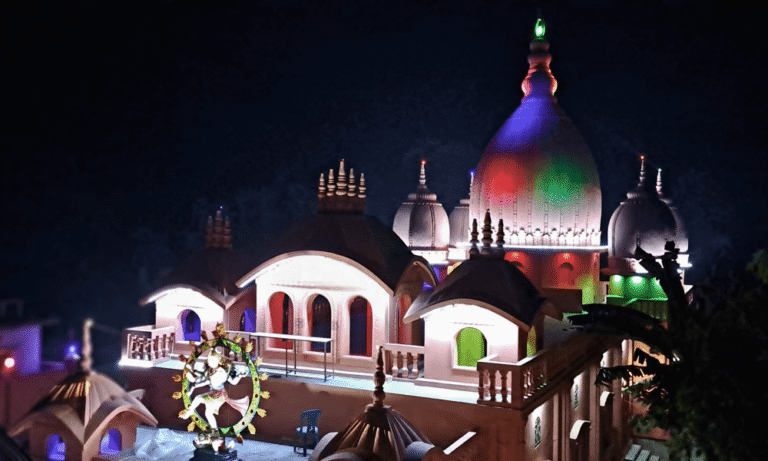
Sri Ramakrishna Temple
The majestic temple stands as a radiant symbol of faith and spirituality, instantly filling every visitor’s heart with devotion and tranquility the moment they step within its sacred premises. In the sanctum sanctorum, the beautifully adorned idols of Thakur Sri Ramakrishna, the Holy Mother Sri Sarada Devi, and Swami Vivekananda are worshipped daily with deep reverence. The temple authorities offer Bhog to the deities, followed by the distribution of prasad among devotees. This serene abode provides the perfect atmosphere for contemplation and inner peace — one may sit quietly, chant the Lord’s name, meditate, or simply absorb the divine vibrations that pervade the surroundings.
Built under the divine guidance and blessings of revered monks from the Ramakrishna Math and Mission, both from India and abroad, the temple is not only a centre of worship but also a beacon of service. It embodies the universal ideals of love, harmony, and selfless service taught by Sri Ramakrishna, Holy Mother, and Swamiji. Beyond its spiritual grandeur, the temple serves as a hub for charitable and educational activities, extending help to the poor, the sick, and the distressed, regardless of caste, creed, or religion—truly reflecting the essence of “Service to man is service to God.
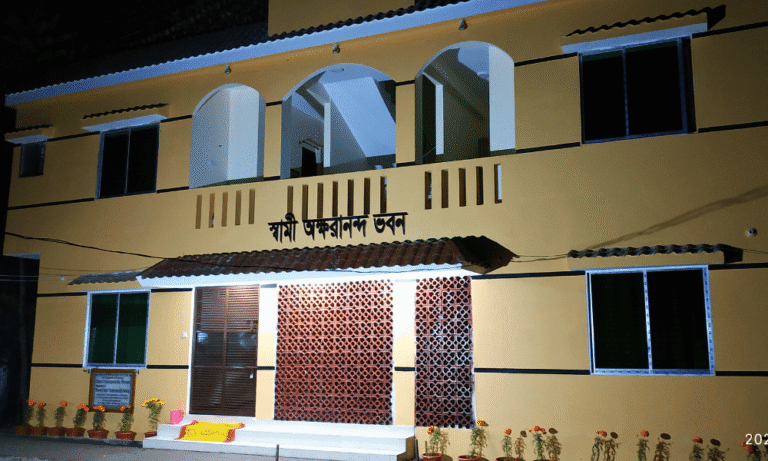
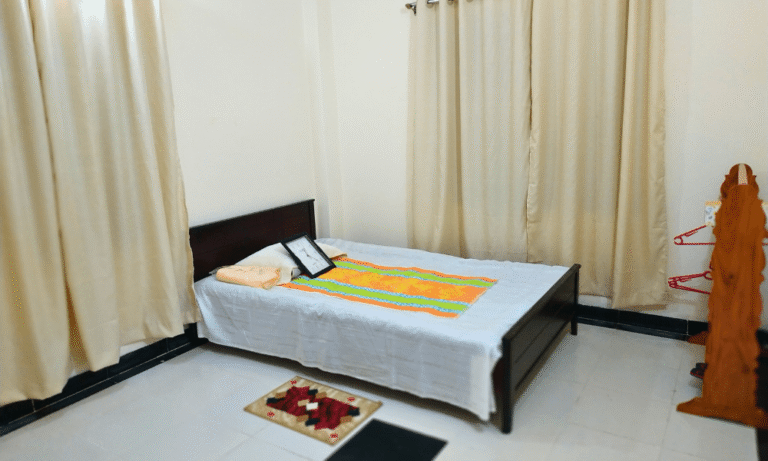
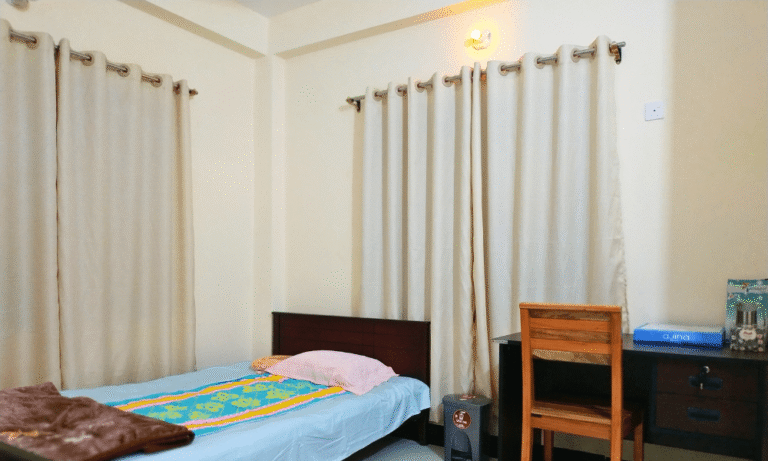
Swami Aksharananda Bhawan
Swami Aksharananda Bhawan stands as a humble yet sacred monument of devotion, service, and remembrance. Constructed with deep reverence, this Bhawan serves as a guest house dedicated to offering seva—loving service—to the revered monks and spiritual dignitaries visiting the Ashram. Every aspect of its creation reflects the spirit of hospitality and respect that lies at the heart of monastic life.
Built in cherished memory of Revered Swami Aksharananda Ji Maharaj, the Bhawan is a tribute to his life of selfless service, spiritual wisdom, and deep devotion to the ideals of Sri Ramakrishna, Holy Mother Sarada Devi, and Swami Vivekananda. It continues his legacy by upholding the values he lived for—purity, humility, and compassionate service to all. The serene atmosphere of the Bhawan offers comfort and peace to visiting monks, enabling them to rest, reflect, and engage in spiritual pursuits. In this way, Swami Aksharananda Bhawan remains a living symbol of reverence, gratitude, and service to the monastic community.
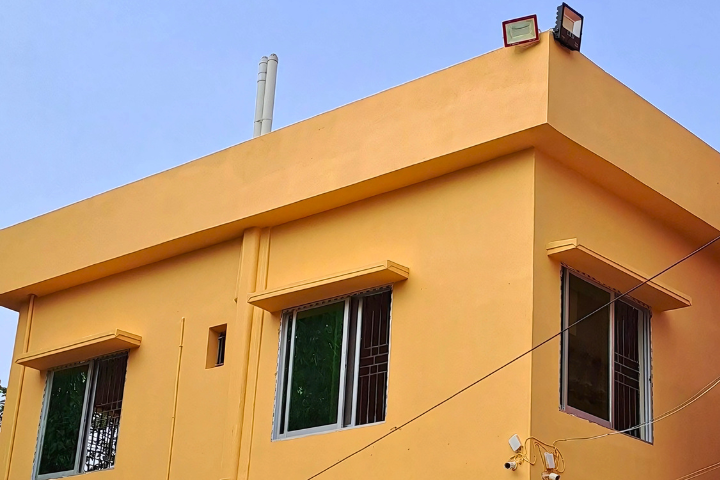
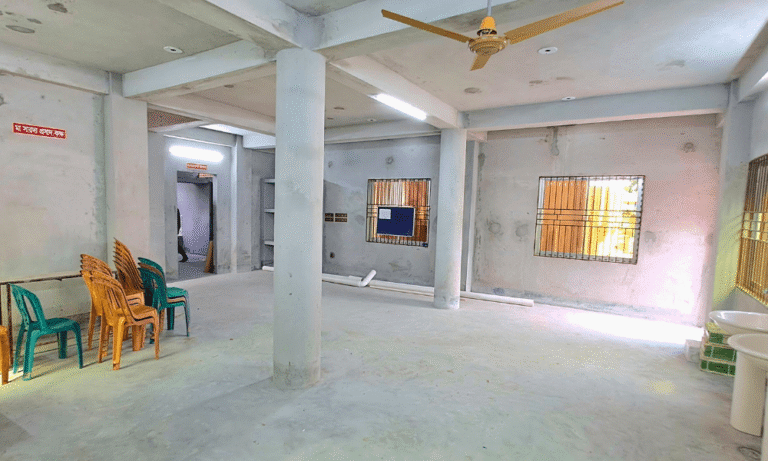
Chandramoni Khudiram Kutir
Chandramani–Khudiram Kutir stands as a heartfelt tribute to the blessed parents of Bhagawan Sri Ramakrishna — Shri Khudiram Chattopadhyay and Shrimati Chandramani Devi. Built with devotion and reverence, this Kutir embodies the sacred memory of the pious couple who gave birth to one of the greatest spiritual luminaries of all time. Their simple yet divinely inspired lives continue to remind devotees of the power of faith, truth, and purity.
The Kutir has been lovingly constructed to serve as a place where prasad is prepared and distributed to devotees and visitors of the Sevashram. Here, food is not merely nourishment—it is sanctified as an offering to the Divine and shared as a token of love and grace. Every meal served carries the spirit of selfless service, compassion, and unity that Sri Ramakrishna’s parents so beautifully exemplified. Chandramani–Khudiram Kutir thus stands as a living symbol of devotion, gratitude, and the timeless tradition of offering seva through feeding the devotees of the Lord.
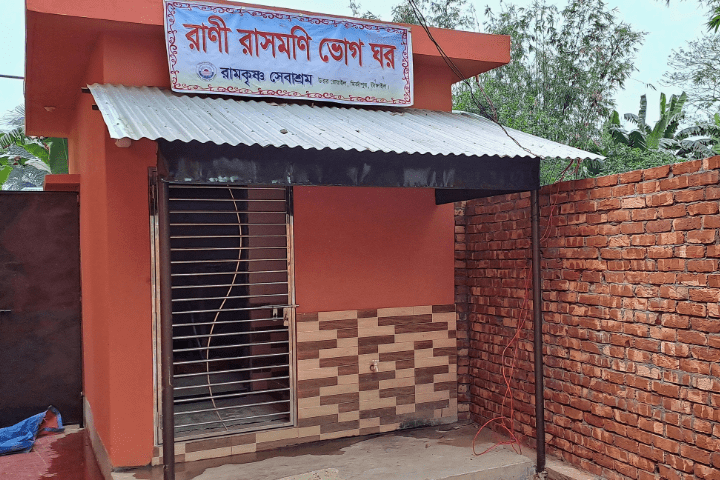
Rani Rashmoni Bhog Ghar
Rani Rashmoni Bhog Ghar is named in loving remembrance of the 19th-century philanthropist and noble-hearted devotee, Rani Rashmoni of Janbazar, Kolkata — a close associate and ardent supporter of Sri Ramakrishna. Renowned for her courage, compassion, and deep faith, Rani Rashmoni dedicated her life and wealth to the service of God and humanity. It was through her devotion and vision that the famous Dakshineswar Kali Temple came into being, where Sri Ramakrishna later served as the head priest and attained divine realization.
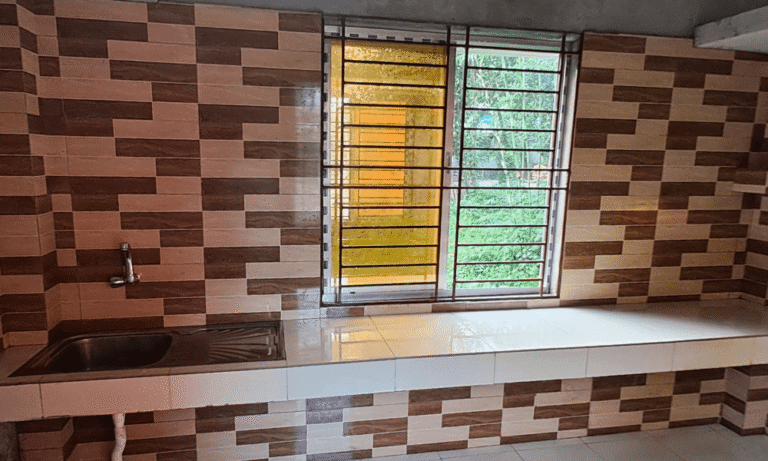
Built in her sacred memory, the Bhog Ghar serves as a place where offerings (bhog) are lovingly prepared for the deities and then distributed as prasad among devotees. Each meal prepared here symbolizes the spirit of service, generosity, and devotion that Rani Rashmoni embodied throughout her life. The Bhog Ghar thus stands not only as a functional space for sacred offerings but also as a lasting tribute to a woman whose faith and philanthropy continue to inspire generations of devotees.
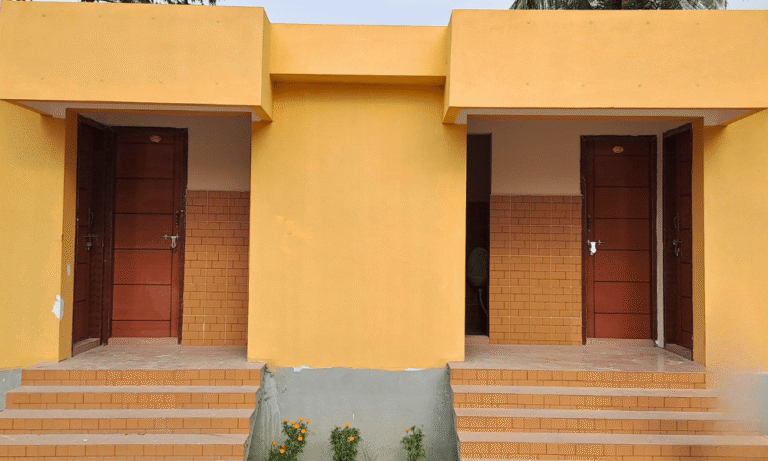
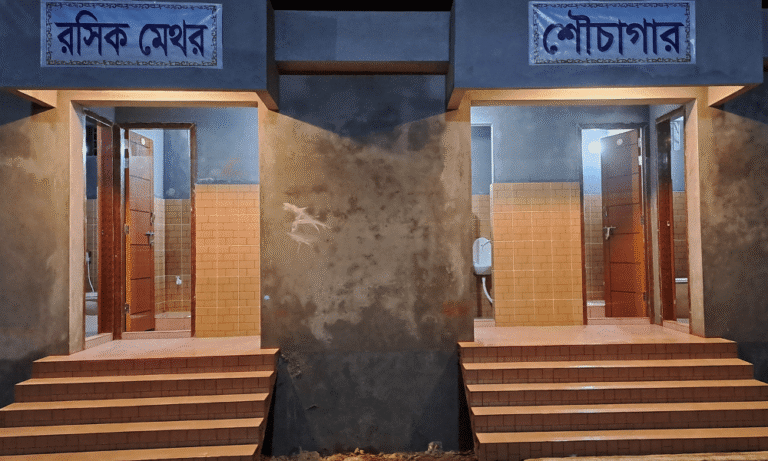
Rasik Methor Shouchagar
Rasik lived in sweepers colony near Dakshineswar Kalibari. He used to keep Dakshineswar Kalibari clean and tidy. Thakur used to love him for his devotion. During his Sadhana (spiritual practice), Thakur secretly went to Rasik’s house at night, washed the drains, etc.and used his long hairs to sweep the floors, and prayed to the Divine Mother to destroy his pride of Brahmanism. One day while meditating, his mind went to Rasik’s house. He asked his mind to remain settled there.